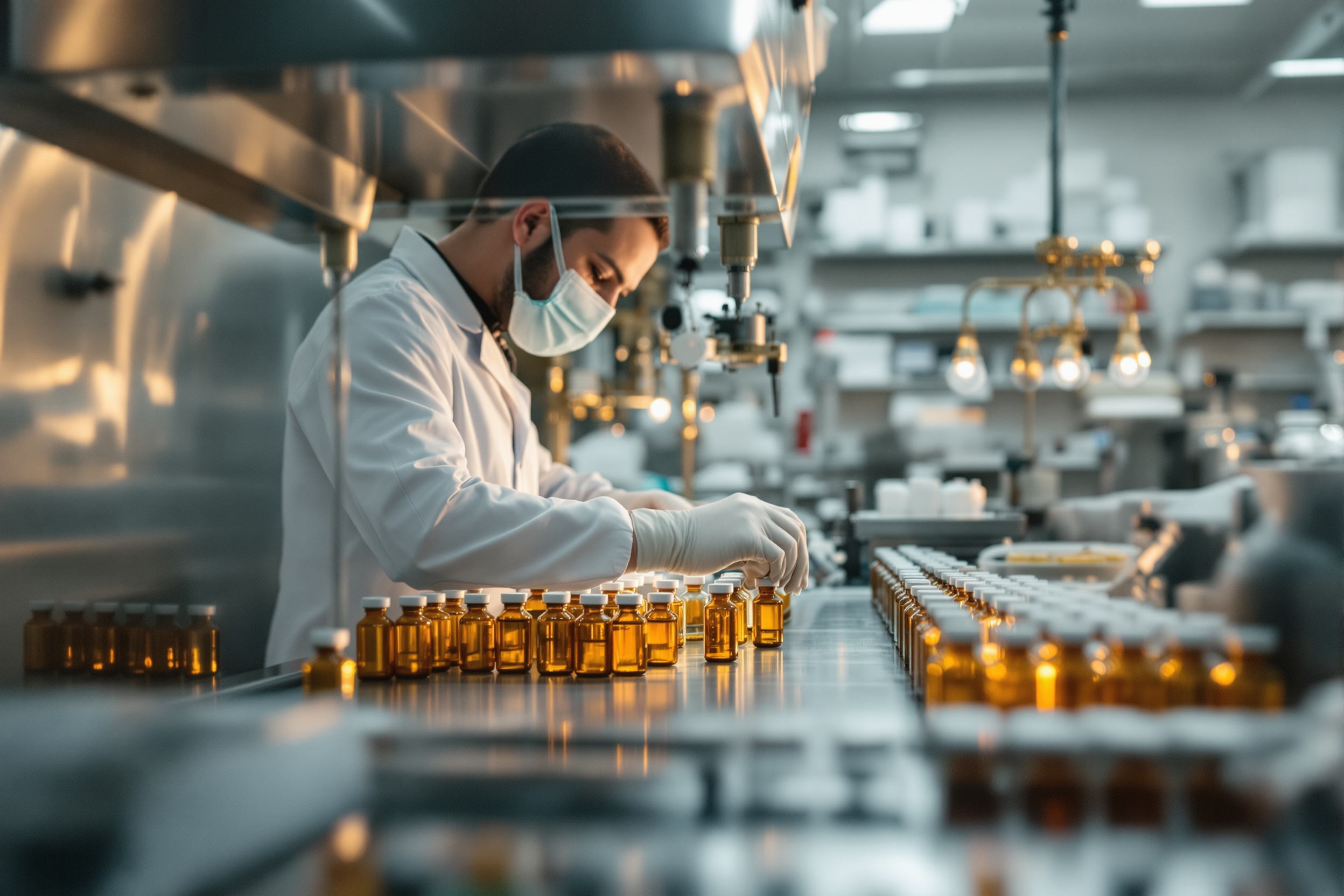
The first time most members hear the word "compounded," it's in a comments section. By the time they reach our intake, they've already heard it called everything from a miracle hack to a danger they should run away from. Both stories are wrong, in roughly equal measure, and for the same underlying reason: the people telling them have not actually been inside a compounding pharmacy.
I have. I've audited five of them on behalf of MyPromise — three 503A and two 503B — and the thing I keep wanting to tell people is how unglamorously careful they are. So this is that note.
What compounding actually is
Pharmaceutical compounding is the practice of preparing a customized medication for an individual patient — a different concentration, a different delivery format, a combination of two ingredients, an exclusion of an allergen — under a licensed pharmacist and against a clinician's order. It is older than the pharmaceutical industry. Most drugs were compounded once.
In the United States, modern compounding is governed by two sections of the Federal Food, Drug, and Cosmetic Act:
- 503A pharmacies prepare patient-specific compounds against a clinician's order, in licensed-and-inspected pharmacies, under USP <795> (non-sterile) and USP <797> (sterile) standards.
- 503B outsourcing facilities prepare batched compounds, are registered with and inspected by the FDA, and follow current Good Manufacturing Practice (cGMP) standards similar to those used for commercial pharmaceuticals.
Both operate under federal law. Both are inspected. Neither is "off-brand."
What the four assays mean
Every batch of medication MyPromise dispenses is tested on four assays before it leaves the pharmacy floor. We publish the results — the certificate of analysis — on your dashboard with the shipment. Here's what each one is actually checking.
Potency
HPLC, or high-performance liquid chromatography, separates the molecules in a sample and tells you exactly how much active ingredient is in the vial. The acceptance window is typically 90 to 110 percent of label claim. "Approximately" doesn't appear on a real certificate.
Sterility
USP <71> testing exposes a sample of the batch to growth media, then watches for fourteen days. Microbial growth means the batch fails. No batch ships before the fourteen days are up. (This is why "rush" sterile compounding is a phrase you should be skeptical of, anywhere you hear it.)
pH
Injectable medications need to sit close to physiologic pH — roughly 6.5 to 7.5 — to be kind to your tissue. A pH outside that band is what makes some "online" injections feel like fire on contact. Tested. Tuned. Logged.
Endotoxins
Bacterial endotoxins are leftover components of bacterial cell walls — they aren't infectious, but they can cause fevers and worse if injected. The Limulus Amebocyte Lysate (LAL) test detects them at levels far below the threshold of clinical concern, and USP <85> sets the limits.
Each of those tests is run on each batch. If a batch fails one, the batch is destroyed. That is what "lab-verified" means at MyPromise: not a marketing badge, but four checkpoints that the pharmacy walked through, in writing, before your shipment ever moved.
Where the bad reputation came from
Compounding had a wake-up moment in 2012, when a single pharmacy in Massachusetts shipped contaminated injections that caused an outbreak of fungal meningitis. Federal law tightened. The 503B category was strengthened. State boards stepped up oversight. The industry today is more accountable than it was, and the pharmacies that didn't keep up went away.
It's also true that the GLP-1 boom of the last few years pulled in operators who shouldn't have been there. We've seen vials with no certificate at all. We've seen "telehealth" sites that won't tell you which pharmacy is filling the prescription. If a platform won't show you which pharmacy compounded your medication, you should walk.
The pharmacy is not a back-office detail. The pharmacy is the medicine.
Why the certificate is on your dashboard
We don't publish the CoA because we have to. We publish it because, for years before any of us worked here, we'd ordered prescriptions and quietly wondered. It costs us nothing to put it next to your shipment, and it tells you something true: that someone, with a name and a license number, signed off on this batch.
If you're considering a compounded protocol — from us or from anyone — the question to ask is simple. Will you show me the certificate of analysis for the batch you're about to send me? A confident pharmacy will say yes. So will a confident telehealth platform. Anything less than yes is your answer.