Free clinical eligibility review · No insurance required · Start your promise →
The MyPromise standard

Receipts, not vibes.

Anyone can write "lab-tested" on a website. We publish the assays, the standards they're held to, and the criteria that get a batch rejected before it leaves the pharmacy. Here is the actual rulebook.

Compounding 101

The short version, with the right words.
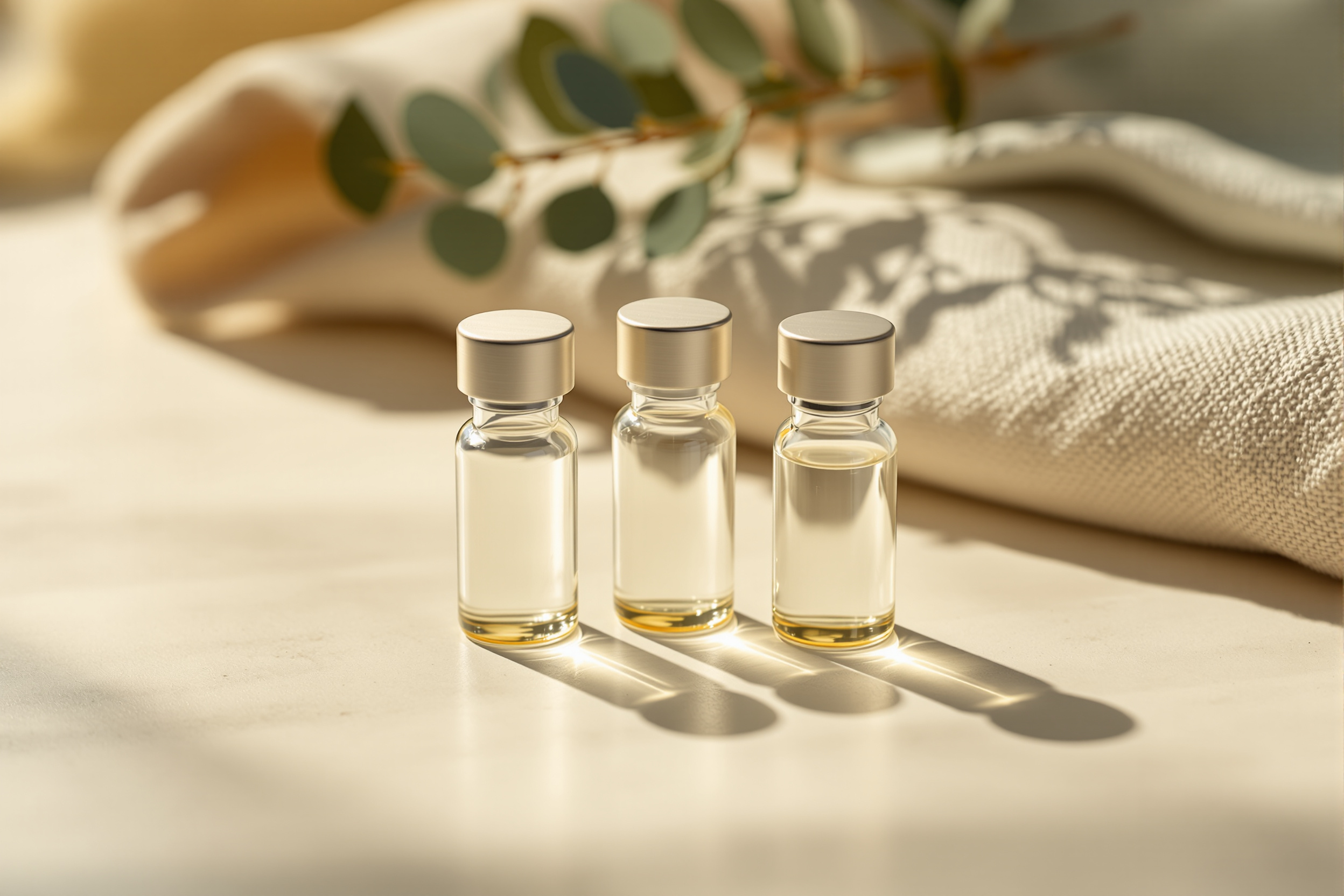
Glass vials in a controlled environment

503A vs 503B — what's the difference?

Compounded medications in the United States are dispensed under one of two sections of the Federal Food, Drug, and Cosmetic Act. 503A pharmacies compound for a specific patient with a specific prescription — your name, your dose. 503B outsourcing facilities compound batch quantities under stricter, FDA-registered manufacturing standards and ship to clinics and dispensers. Both are legal, both are inspected, and both have a place in modern medicine. We use both, depending on the protocol.

USP <797> — the cleanroom standard.

USP General Chapter <797> is the U.S. Pharmacopeia's standard for sterile compounding. It governs everything from the laminar-flow hood the pharmacist works in, to the gowning, to the air-particle counts, to the beyond-use date your medication is allowed to carry. It is the reason your vial doesn't grow things it shouldn't. Every MyPromise medication is compounded under USP <797>-compliant conditions.

Why we visit pharmacies in person.

Audit reports are a starting point, not an endpoint. Our Head of Pharmacy Quality visits every active 503A and 503B partner, walks the cleanroom, reviews the lot logs, and sits with the QA pharmacist. Partners that don't accept that visit don't become partners. The list is intentionally short.

The four assays

Four tests. Every batch. Receipts on file.

A lot of telehealth brands say "lab-tested." Here is exactly which labs, against which standards, and what it would mean for a batch to fail. Your dashboard ties the certificate of analysis to your shipment by lot number — there is nothing for you to request.

Potency (HPLC)

High-performance liquid chromatography · USP method-validated

Potency confirms how much active ingredient is actually in your vial — not "approximately." A reference standard is run alongside the sample, and the active is quantified by retention time and peak area against that standard. The acceptance window is narrow on purpose.

If a lot comes back outside the agreed range — even a few percentage points off label claim — the lot doesn't ship. We'd rather miss a refill window than send underdosed or overdosed medication into your fridge.

Sterility (USP <71>)

Direct inoculation or membrane filtration · 14-day incubation

USP <71> sterility testing screens an injectable product for bacterial and fungal contamination. The sample is incubated in two media at two temperatures for fourteen days, watching for any visible microbial growth. There is no version of this test we are willing to skip or shortcut.

Cold-chain shipping protects sterility after it leaves the pharmacy; the assay protects it before. Together they are the only legitimate answer to "is this safe to inject?"

pH balance

Calibrated electrode · physiologic target window

pH determines how comfortable an injection is — and how stable the active ingredient remains in solution. Too acidic and the injection stings; too basic and the active can degrade. We tune buffers so the finished preparation lands inside a physiologic-friendly window.

This is the assay that separates "it works" from "it works without ruining your evening." A small detail to obsess over, on purpose.

Endotoxins (LAL)

Limulus amebocyte lysate · USP <85> limits

Endotoxin testing detects bacterial cell-wall fragments that can survive sterilization but still cause fever, hypotension, and other systemic reactions. The LAL assay uses a horseshoe-crab-derived reagent (or a recombinant equivalent) that clots in the presence of endotoxin.

USP <85> sets the maximum allowable level for parenteral preparations by route and dose. Every MyPromise injectable lot must clear that limit before it leaves the pharmacy. No exceptions, ever.

What gets rejected

The least romantic part of the job.

Quality is mostly a list of reasons to throw something away. Here are the criteria that pull a lot before it can be labeled and shipped.

  • Potency outside the agreed-on label-claim window for the active ingredient
  • Any positive sterility result during the fourteen-day USP <71> incubation
  • Endotoxin level above the USP <85> threshold for the route and dose
  • pH outside the protocol's defined acceptance window
  • Visible particulates on inspection of the finished product
  • Cleanroom environmental monitoring excursion during the compounding window
  • Stability data that doesn't support the assigned beyond-use date
  • Discrepancy between batch records and finished-product labeling
Our pharmacy partners

A short list, intentionally.

A pharmacist filling small medication vials at a stainless-steel laminar flow hood

MyPromise dispenses through a small, vetted set of U.S. compounding pharmacies — both 503A and 503B — selected for their inspection record, their willingness to grant us recurring on-site audits, and the quality of the people behind the laminar-flow hood. We deliberately do not work with every pharmacy that asks.

Every active partner is licensed in the states where it dispenses, registered with the appropriate boards of pharmacy, and operates under USP <797> compliant cleanroom conditions. Several hold additional accreditation from the Pharmacy Compounding Accreditation Board (PCAB) — a voluntary, third-party seal we treat as table stakes for this category.

If a partner ever stops meeting our standard — for any reason — we end the relationship before the next refill cycle. The list is short on purpose. It will stay that way.

503A licensed 503B registered USP <797> compliant PCAB accredited State board licensed
Side by side

Compounded vs. branded — what's the difference?

A short, honest comparison. Both have a place. Different problems call for different tools.

MyPromise compounded FDA-approved branded
Prescribed by a U.S. licensed clinician Yes Yes
Per-batch lab assays (potency, sterility, pH, endotoxins) Every batch, on your dashboard Manufacturer-controlled, not on dashboard
FDA-approved as a finished drug product No (compounded under 503A / 503B) Yes
Dose customization to your protocol Titrated by your clinician Fixed dose presentations
Insurance coverage Cash-pay (HSA / FSA accepted) Sometimes
Typical lead time to first dose 2–5 business days post-approval Variable; subject to insurance
Available during a brand shortage Often Subject to shortage

Compounded medications are not FDA-approved as finished drug products. Your clinician will discuss what's appropriate for your protocol.

Ready when you are

A promise is just a plan with a witness.

Take the twelve-minute eligibility review. A licensed clinician will read your intake, recommend a protocol — or tell you honestly that we're not the right fit. Either way, you'll know within a day.